

[FIATA Press conference] Chokepoints of Global Trade: Maritime Security, Geopolitics and Economic Consequences
[FIATA Press conference] Chokepoints of Global Trade: Maritime Security, Geopolitics and Economic Consequences
The Geneva press club and FIATA, the International Federation of Freight Forwarders Associations are pleased to invite you to a press conference featuring:
- Prof Dr Thomas Sim, FIATA President
- Mr Turgut Erkeskin, FIATA Immediate Past President
- Mr Jens Roemer, FIATA Senior Vice-President
- Dr Stéphane Graber, FIATA Director General
Pour participer, merci de vous inscrire à l’aide des liens suivants :
Preceded by coffee at 10:30 and lunch will be served at 12:00.
On the occasion of FIATA’s 100th anniversary, the Press Conference, taking place during the 2026 HQ Meeting in Geneva, will bring together experts in maritime transport to discuss the growing pressures on global shipping routes.
A Supply Chain Under Pressure
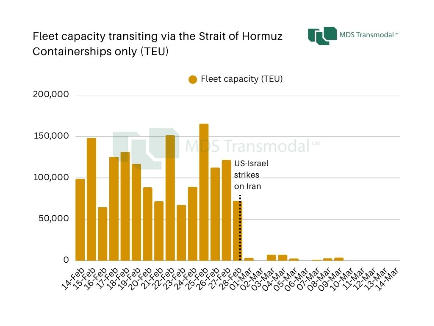
Global logistics is facing an unprecedented crisis. The Strait of Hormuz handles an estimated 20% of the world’s daily oil supply and facilitates 11% of global maritime trade (UNCTAD). The current Middle East security situation has decreased vessel movement through the Strait of Hormuz from 20 to 1-2 vessels per day since 1 March 2026, and 0 between 10-14 March (MDS Transmodal). Its near-closure is sending ripple effects across the entire global economy, disrupting not only maritime transport but also airfreight, with the current Middle East security situation having impacted 21% of the world’s air cargo flows (World ACD Market Data). What does this mean for the supply chain?
In direct response, FIATA has swiftly published a dedicated Legal & Insurance Briefing — Middle East Security Situation: Contractual and Insurance Considerations for Freight Forwarders, providing practical guidance on the contractual and insurance implications of the current crisis, demonstrating FIATA’s commitment to delivering timely, actionable support to its members and the wider logistics industry.
During the Press Conference, experts in maritime logistics and freight forwarding will share details of this guidance, assess the resilience of global supply chains, examine the economic implications for trade and prices, and explore how integrated, cross-modal approaches — including rail, road and air — can strengthen supply chain resilience when sea routes are disrupted. Multimodal connectivity has taken on renewed strategic importance, with freight forwarders playing a pivotal role in redirecting cargo flows across modes to maintain the continuity of global trade.
About FIATA
FIATA represents the global freight forwarding and logistics industry across all transport modes, with membership spanning over 150 territories and an estimated 40,000 firms. Through its active participation with international organisations and government authorities worldwide, FIATA represents the voice of global logistics to shape the regulatory and operational landscape of global logistics, addressing broader structural challenges across all transport modes — air, sea, road and rail — encompassing regulatory developments, governance frameworks, and multimodal connectivity, particularly the efficiency of transshipment and intermodal links that are essential to the smooth functioning and resilience of global supply chains.